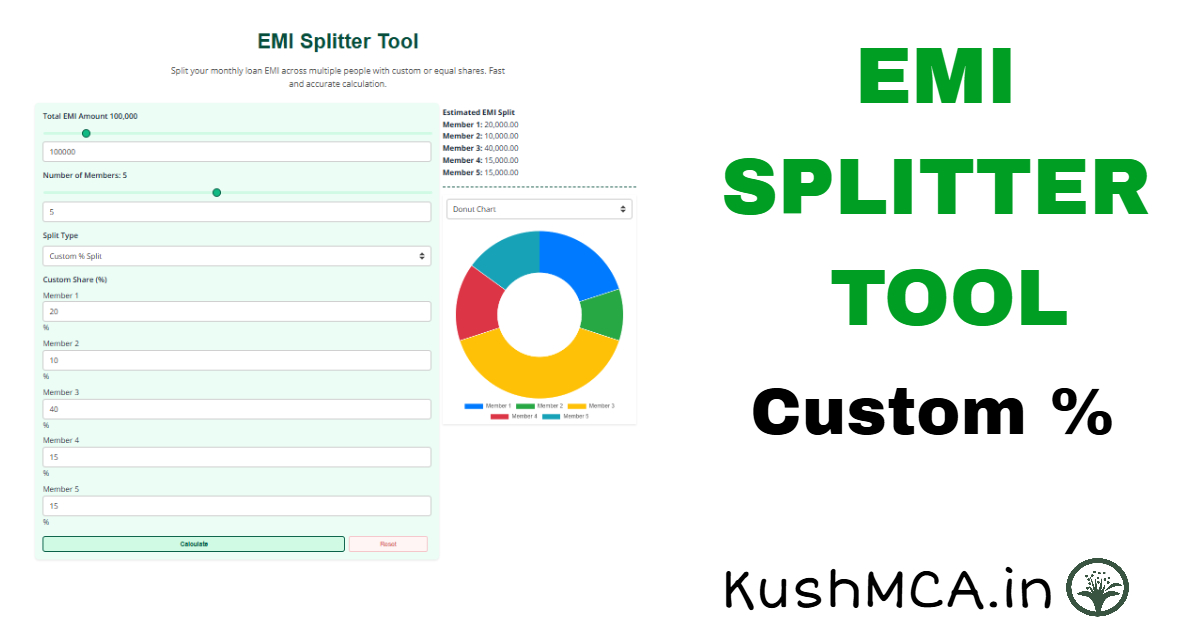
Use an EMI split calculator to divide loan EMIs between co-borrowers equally or based on custom income percentages.
Link copied to clipboard!
Shared loans often begin with optimism. Responsibilities feel evenly matched, trust is high, and the focus stays on getting approval rather than managing repayment. The real challenges usually surface later, when monthly obligations intersect with individual cash flows.
A common assumption is that splitting a loan is automatically fair if both names appear on the application. What gets overlooked is that fairness in responsibility does not always translate to fairness in monthly comfort.
This quiet mismatch between shared commitment and personal affordability is where tension can slowly build.
Understanding the idea without complexity
When more than one person repays a loan, the installment becomes a shared obligation. How that obligation is divided shapes how manageable it feels for each person.
Splitting can be equal, or it can reflect relative earning capacity. The choice is less about rules and more about alignment with real financial lives.
Why this calculation is often misunderstood
Many borrowers assume equal division is the most straightforward option. It looks balanced on paper and avoids uncomfortable conversations.
This is where most people get surprised. Equal does not always mean sustainable, especially when income levels or financial commitments differ.
Why this clarity matters for shared decisions
Loan repayments are long-term relationships with money. Misaligned expectations can create stress even when the total installment is affordable.
Calculating different split options reveals how responsibility can be shared without straining one side disproportionately.
The role of time and small adjustments
Over time, small imbalances add up. A slightly heavier share taken consistently can limit saving ability or increase financial pressure.
When you calculate it, the pattern becomes clearer. Minor adjustments in split ratios can significantly improve long-term comfort.
A realistic repayment scenario
Consider two co-borrowers with different income stability. An equal split may feel fair initially, but changing circumstances can shift the burden.
Looking at alternative splits brings clarity. Numbers often reveal what assumptions hide when future flexibility is considered.
Common mistakes that lead to friction
- Defaulting to equal split without discussion
- Ignoring existing personal expenses
- Not revisiting the split as incomes change
- Assuming informal understanding will always hold
These issues usually arise from avoidance, not lack of goodwill.
How this differs from standard loan planning
Traditional loan tools focus on total installment and tenure. A split-focused approach shifts attention to individual impact.
This perspective adds a human layer to financial planning, recognizing that shared numbers affect different lives.
Using the calculator as a conversation aid
The calculator works best when used to explore scenarios together. Adjusting split ratios helps visualize how responsibility can be balanced.
Exploration supports transparency. Instead of debating fairness abstractly, clarity comes from seeing outcomes side by side.
The psychological side of shared repayment
Clear agreements reduce unspoken stress. When expectations are aligned upfront, trust remains intact through the loan period.
Confidence grows when responsibility feels fair and visible. Trying different scenarios with the calculator supports calm discussions, reinforces long-term thinking, and helps shared financial decisions feel cooperative rather than burdensome.
Related Articles
View allTrending Articles
- Compound Interest Calculator Explained: How Your Money Grows Over Time
- Ring Fence Calculator Explained: How to Protect Your Financial Goals
- How to Split Loan EMI Between Co-Borrowers: Calculator & Examples
- CAGR Calculator Guide: Measure Real Investment Growth Accurately
- EMI Split Calculator Explained: Split Loan EMIs Equally or by Custom Percentage
- EMI Calculator Explained: How to Calculate Loan EMIs Before Applying